TITLE OF TALK: Sibling Rivalry: Unpacking the Art of Branwell Brontë
Speaker: Dr Maebh O’Regan
Date: Tuesday 22 September 2026 via Zoom at 18.30
This talk will take place exclusively online via zoom, there is no in person attendence, a link will be sent out via email prior to the talk. A recording will be made available for all attendees to watch for a month after the date. Tickets on sale here.
Synopsis:
Dr Maebh O’ Regan’s talk examines the art of Branwell Brontë, with special focus on his process and practice. Collaboration and rivalry were the driving forces behind the Brontë siblings’ creative endeavours, but given the Victorian construction of masculinity, where the male was the breadwinner and, in every way superior to the female, Branwell had his limitations.
Charlotte was the first member of the Brontë family to achieve success as a visual artist. In 1834 she had two drawings accepted for the summer exhibition in the Royal Society for Encouragement of the Fine Arts in Leeds, and these architectural landscapes were displayed in company with the work of such established artists as J. M.W. Turner.
1834 was also the year when Emily and Anne joined forces creating their first diary paper in visual and verbal format.
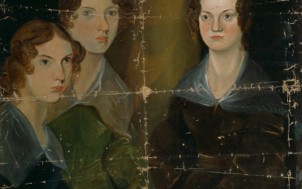
Branwell’s initial work in oils, The Brontë Sister’s Portrait, also known as The Pillar Portrait, was painted the same year. It’s first critic, Mrs Gaskell, deemed it to be, ‘not much better than a sign painting as to manipulation, but the likenesses were admirable.’ Much of the negative criticism regarding Branwell’s work derives from a lack of understanding of the materials and methods available to a Victorian artist. However, The Pillar Portrait continues to be one of the most popular works in the British National Portrait Gallery. This mysterious painting raises many questions around its composition and content. Why did Charlotte deny the existence of The Pillar Portrait, and why is there no mention of this painting in their family correspondence? What prompted Arthur Bell Nicholls to remove it from its stretcher and to secrete it on top of a wardrobe at his home in Banagher, Ireland? And finally, why did the National Portrait Gallery decide not to restore the work before they put it on display?
To address these questions, it is necessary to explore Branwell’s artistic journey in light of the pedagogical standards of the day. The visual arts played a significant role in the lives of all of the Brontë children therefore, it is important to analyse Branwell’s artistic output in conjunction with his creative interaction with his siblings.
Dr Maebh O’ Regan’s biography:
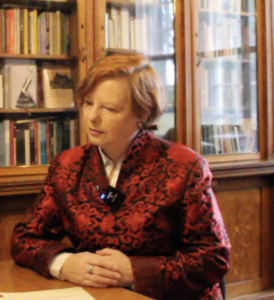
Dr Maebh O’Regan is an art historian and filmmaker whose career spans research, teaching, curation, and a deep commitment to documenting Irish artistic heritage. A graduate of Trinity College Dublin, she later completed a PhD at the National College of Art and Design on the Irish Impressionist Richard Thomas Moynan, and has lectured at NCAD since 2000. Her interest in under‑documented Irish artists led to the publication of Studio Secrets: Art in Kildare and the curation of three accompanying exhibitions.
Maebh’s work increasingly explores film as a way of capturing artistic practice and uncovering overlooked histories. Her documentaries feature leading Irish artists and, more recently, focus on the significant Irish connections within the Brontë story. This includes collaborations with Banagher historians and craft groups, films on Arthur Bell Nicholls, the discovery of the Brontë family portrait at Hill House, and her investigations into Charlotte Brontë’s marriage agreement.
She has presented her research internationally, including at the Kilkee Brontë Festival, and continues to champion the Irish dimension of the Brontë legacy. Maebh is Vice Chair of the Banagher Brontë Group, founded in 2023.
